
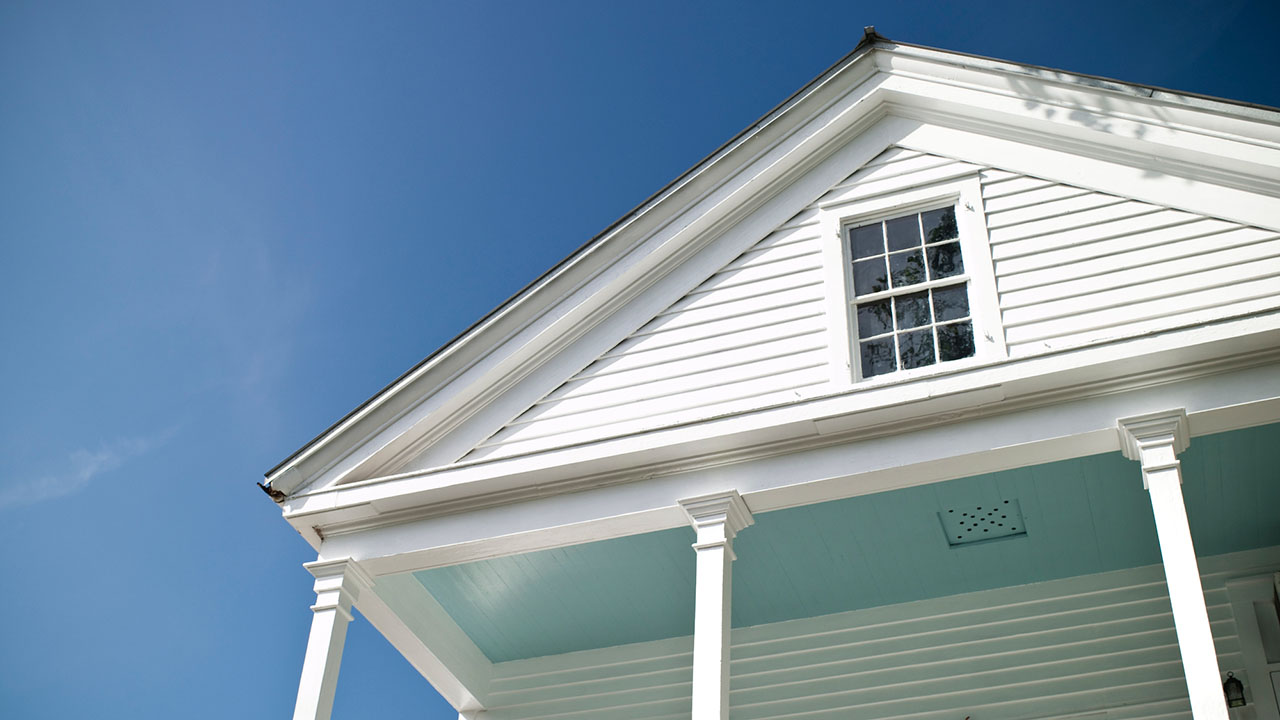
The most beautiful detail of a historic Key West home is one most people never notice. It is not the gingerbread fretwork or the wraparound porch or the tin roof gone soft and silver with age. It is above all of those. To find it, you have to do the one thing the island is forever inviting you to do: slow down, and look up.
There, beneath the eaves of the oldest homes in Old Town, you will find it — a soft, washed shade of blue painted across the porch ceiling. It reads, at first glance, as a simple echo of the sea and sky that surround the island on every side. The truth is older and far more interesting.
The color has a name: haint blue. “Haint” is an old Southern turn on “haunt,” and the tradition behind it runs centuries deep. It is most often traced to the Gullah Geechee — descendants of West and Central Africans enslaved across the coastal South — who, through generations of relative isolation, preserved a singular culture and a body of belief that endures to this day. In Gullah folklore, restless spirits could not cross water. A ceiling painted the color of water, then, became a threshold a haint could not pass: a quiet act of protection rendered in pigment. That the dye itself was so often indigo — the very crop that enslaved hands were forced to cultivate — gives the tradition a depth worth honoring rather than reducing to charm. To use the color with awareness is to keep faith with where it came from.
What has carried it across two centuries and into the porches of this island, though, is something a homeowner feels the moment they stand beneath it. A blue ceiling does something no other color does. In the long light of late afternoon, it seems to dissolve the boundary between the structure and the sky, drawing the heavens down into the shade of the porch. It cools. It calms. It lends even the grandest house an unmistakable serenity. The early mixtures, bound with lime, happened to discourage insects as well, and so practicality and belief settled comfortably into one another, the way the best traditions do.
This is precisely the kind of detail that separates a house from a home, and a transaction from a life. The value of a historic Key West residence has never been only in its square footage or its address. It lives in the accumulation of small, soulful things — the pine of the floors, the pitch of the roof, the blue overhead — each one a sentence in a story the house has been telling since long before you arrived. When we walk a property with someone who is ready to belong to that story, these are the things we point out. Not because they move an appraisal, but because they are the reason the house is worth wanting in the first place.
So the next time you find yourself beneath a Key West porch as the day softens toward evening, look up. The blue you are standing under is more than paint. It is the island, quietly remembering itself — and inviting you to become part of what it remembers.