

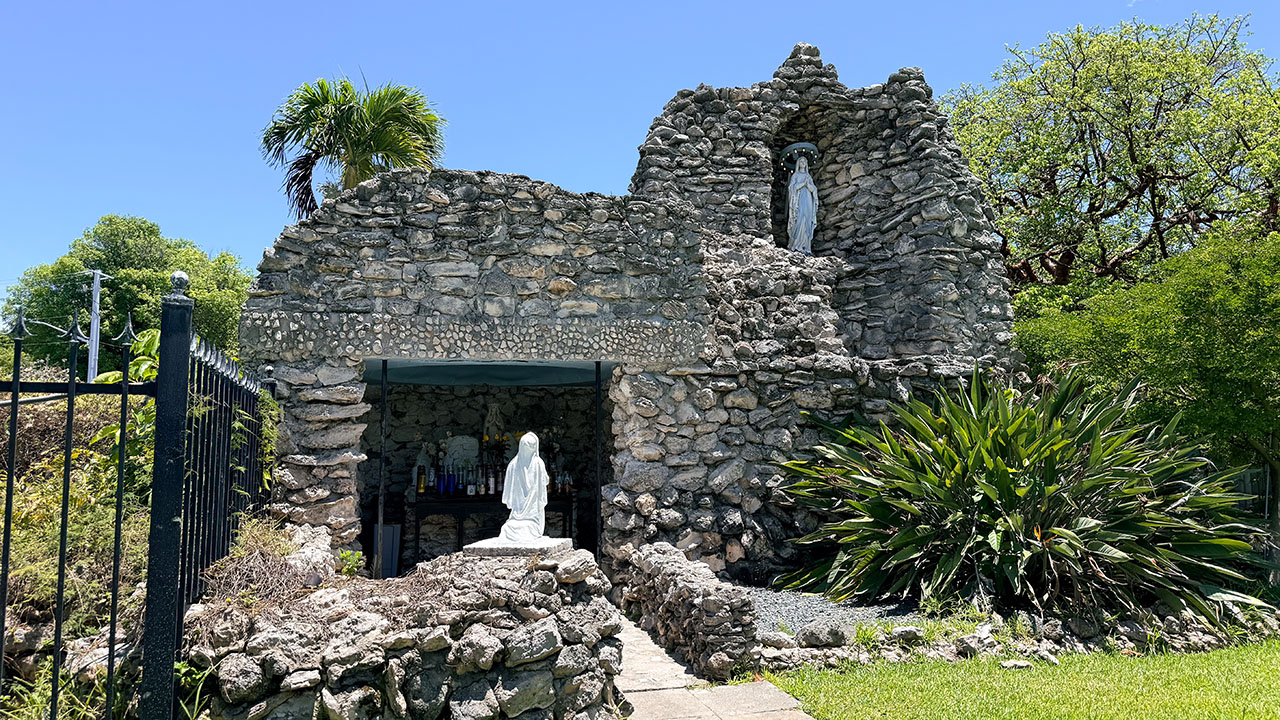
Historic Hurricane Grotto at Basilica of St. Mary Star of the Sea – Photo by: @NikaStroblePhotography
A quiet corner of Truman Avenue holds one of the island’s most enduring traditions — and a story that still shapes how locals think about hurricane season. By Allison Findlay, Realtor® | Brenda Donnelly Real Estate
Drive past the Basilica of St. Mary Star of the Sea on Truman Avenue and you might miss it. A small coral-rock shrine, tucked into a garden, weathered by a century of salt air. No plaque shouting its significance. No tour bus parked out front. Just a quiet structure that generations of Key West residents have credited with keeping the island standing.
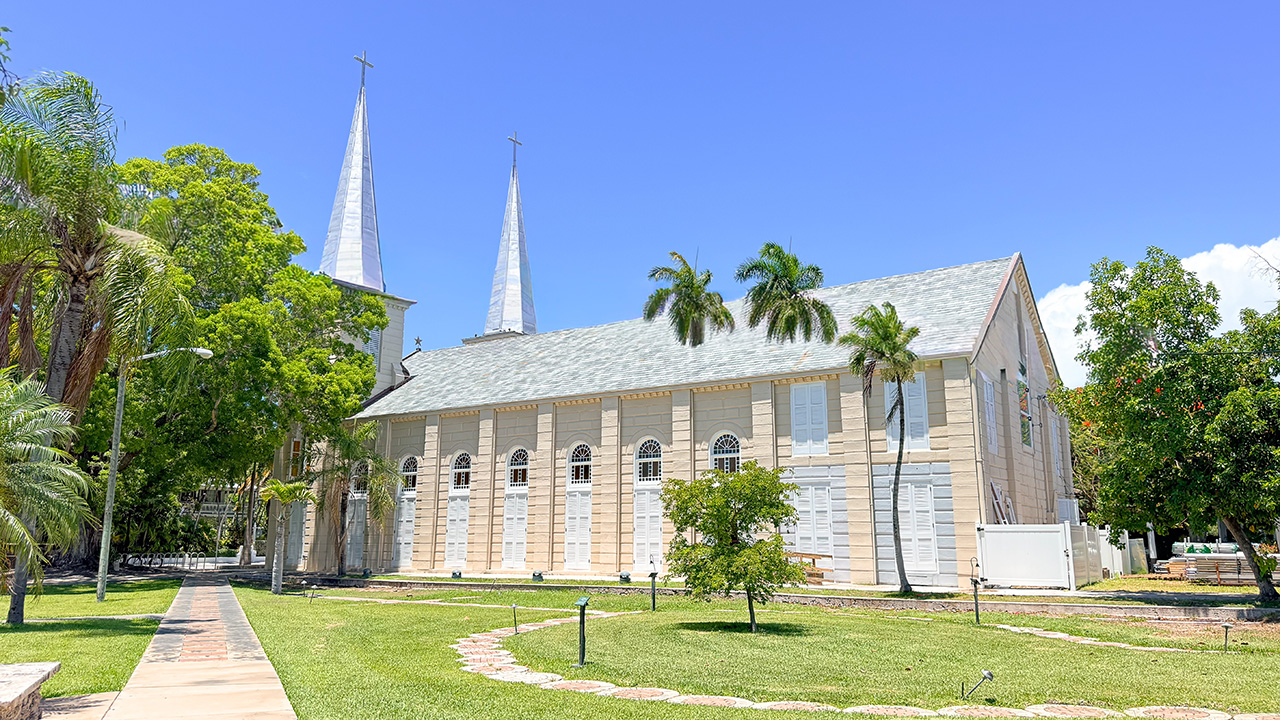
Basilica of St. Mary Star of the Sea – Photo by: @NikaStroblePhotography
This is the Hurricane Grotto. And in a town where neighbors still talk about Wilma, Irma, and the storms their grandparents survived, it’s one of the most meaningful landmarks on the island.
A Shrine Born From the 1919 Storm
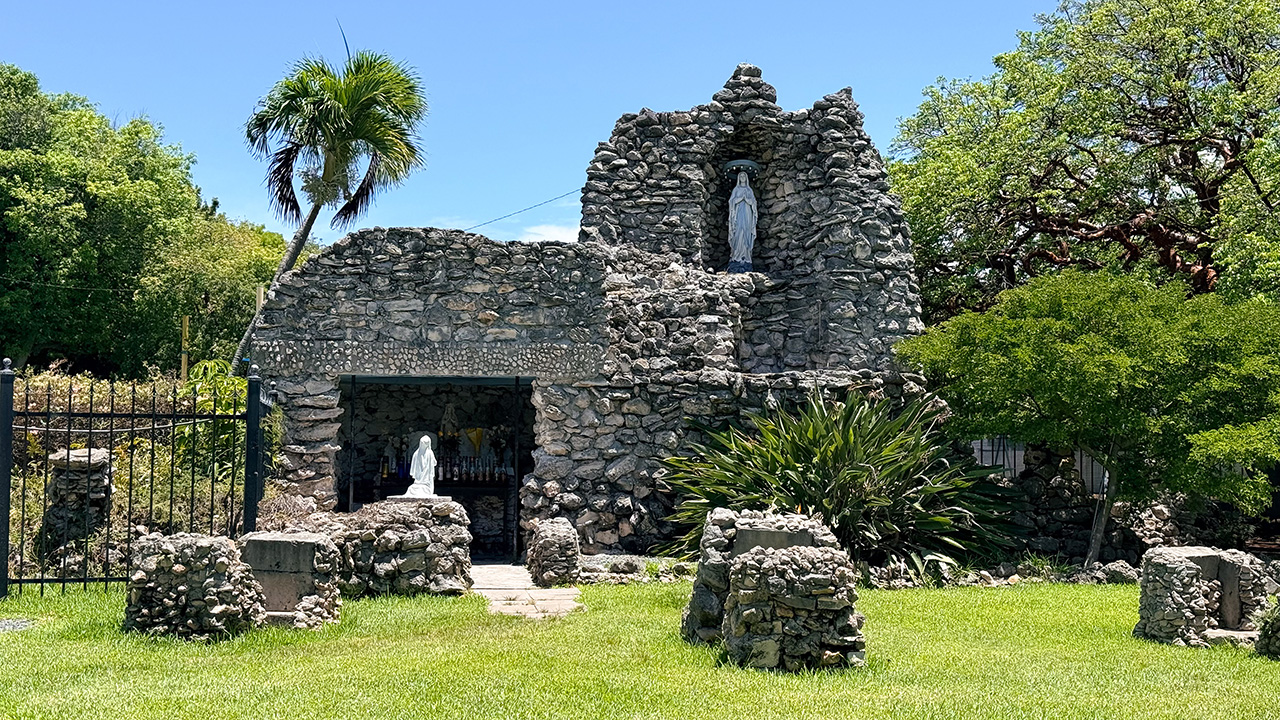
Historic Hurricane Grotto at Basilica of St. Mary Star of the Sea – Photo by: @NikaStroblePhotography
The grotto was built in 1922, three years after the 1919 hurricane carved a path through the Florida Keys. That storm flooded streets, destroyed homes, and left a community grieving long after the wind died down. Recovery in those years wasn’t measured in insurance claims or FEMA timelines. It was measured in whether your neighbors were still there the following spring.
Sister Louis Gabriel, a nun who had already weathered several major hurricanes during her years serving in Key West, believed the island needed something more than rebuilt rooftops. She organized the construction of a shrine to Our Lady of Lourdes, using native coral rock pulled from the church grounds themselves — the same stone that forms the foundation of so many historic Key West homes.
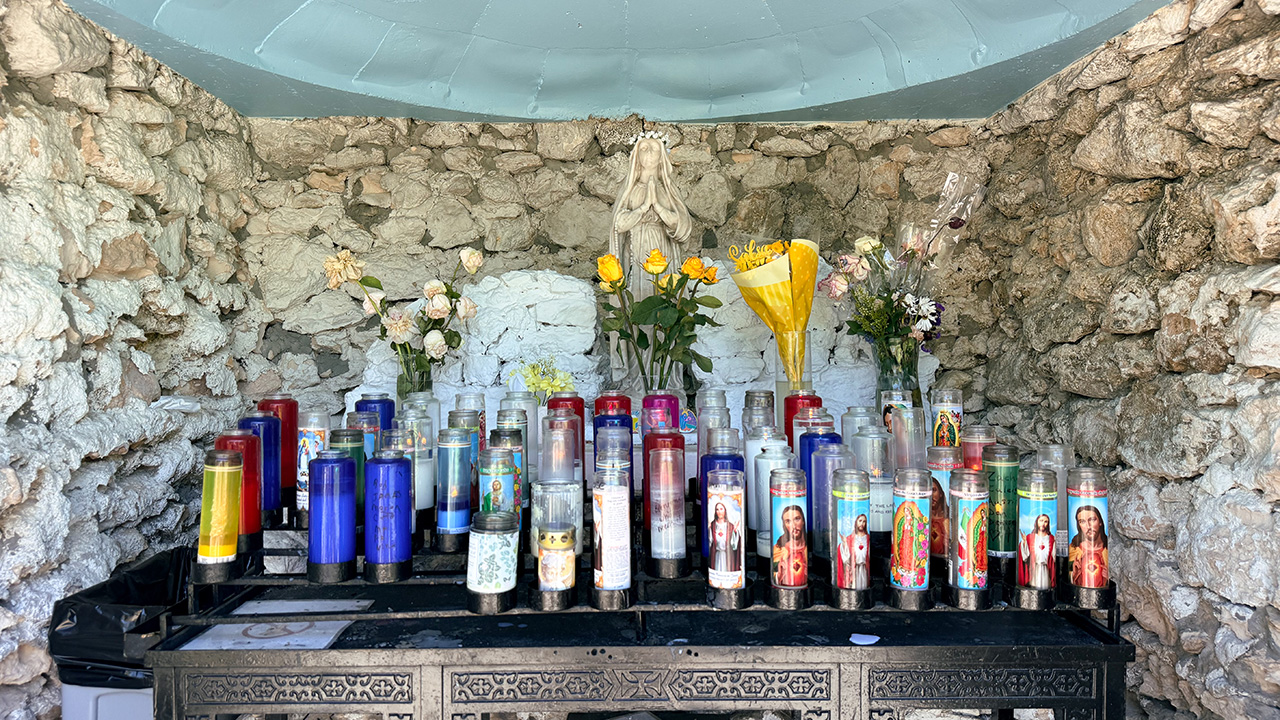
Historic Hurricane Grotto at Basilica of St. Mary Star of the Sea – Photo by: @NikaStroblePhotography
At the dedication, she is remembered for saying:
“As long as the grotto stands, Key West will never experience the full brunt of a hurricane.”
A century later, locals still repeat it.
Key West has taken its share of direct hits. But residents will tell you, often with a small smile, that the truly catastrophic storms — the ones forecasters expect to flatten the island — tend to wobble, weaken, or veer at the last moment. Wilma in 2005. Irma in 2017. Storms that should have been worse, somehow weren’t.
Is it the grotto? Most people won’t claim certainty. But ask anyone who has lived through a Key West hurricane season, and you’ll hear the same thing: faith and preparation aren’t separate things here. They live side by side.
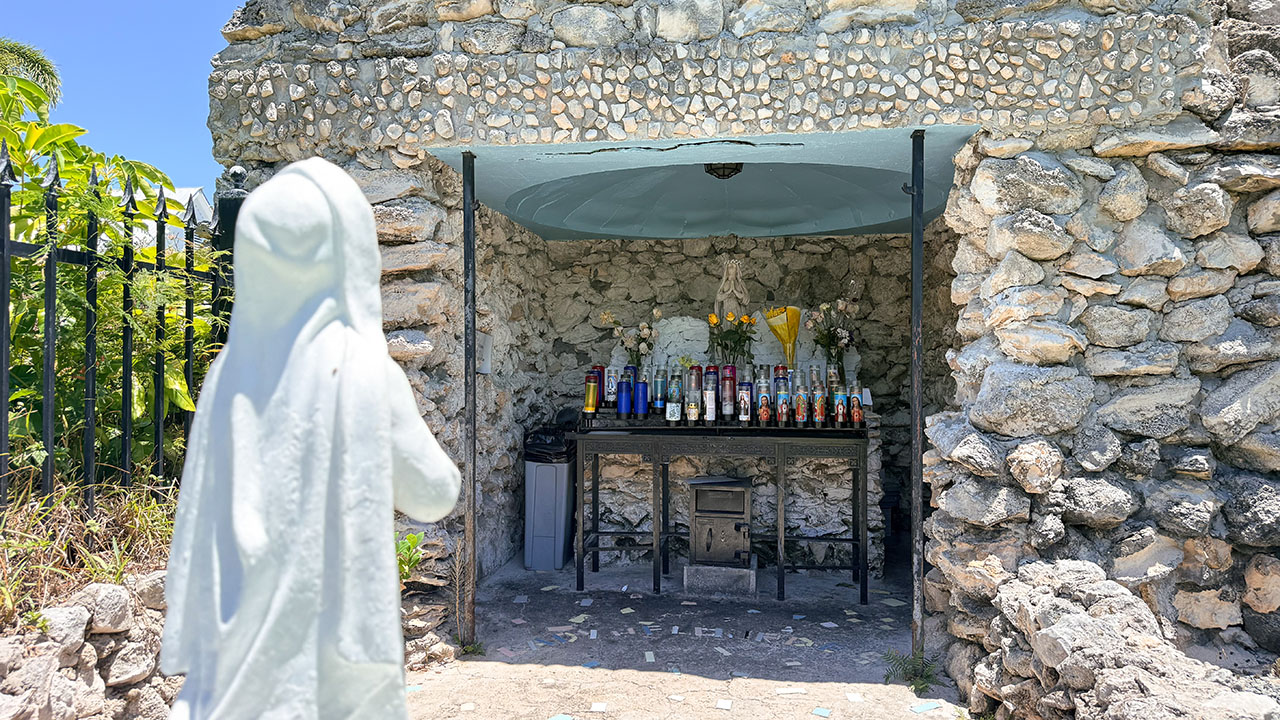
Historic Hurricane Grotto at Basilica of St. Mary Star of the Sea – Photo by: @NikaStroblePhotography
What Buyers Should Understand About Historic Key West Homes
“When I show clients homes in Old Town, I always tell them the same thing — you’re not just buying square footage on this island. You’re buying into a community that has weathered every storm in modern American history and is still standing. The coral rock foundations, the elevated Conch-style construction, the way these homes face the prevailing breezes — none of that is accidental. It’s a hundred years of hard-earned wisdom built into the architecture.” — Allison Findlay, Brenda Donnelly Real Estate
That craftsmanship is part of what makes historic Key West homes hold their value the way they do. The original builders worked with the climate, not against it. Tin roofs designed to shed water and reflect heat. Tall ceilings and shuttered windows for natural cooling. Foundations built from the same coral rock as the grotto itself.
When I walk a buyer through a 1900s Conch house in Old Town or a restored property near Casa Marina, I point those details out. They aren’t just charming — they’re the reason these homes are still here.
Visiting the Grotto
The grotto sits on the grounds of the Basilica of St. Mary Star of the Sea at 1010 Windsor Lane, just off Truman Avenue. It’s open to visitors during daylight hours, free to enter, and quiet enough that you’ll likely have it to yourself. Many longtime residents stop by at the start of hurricane season — June 1 — to leave a flower, light a candle, or simply pause.
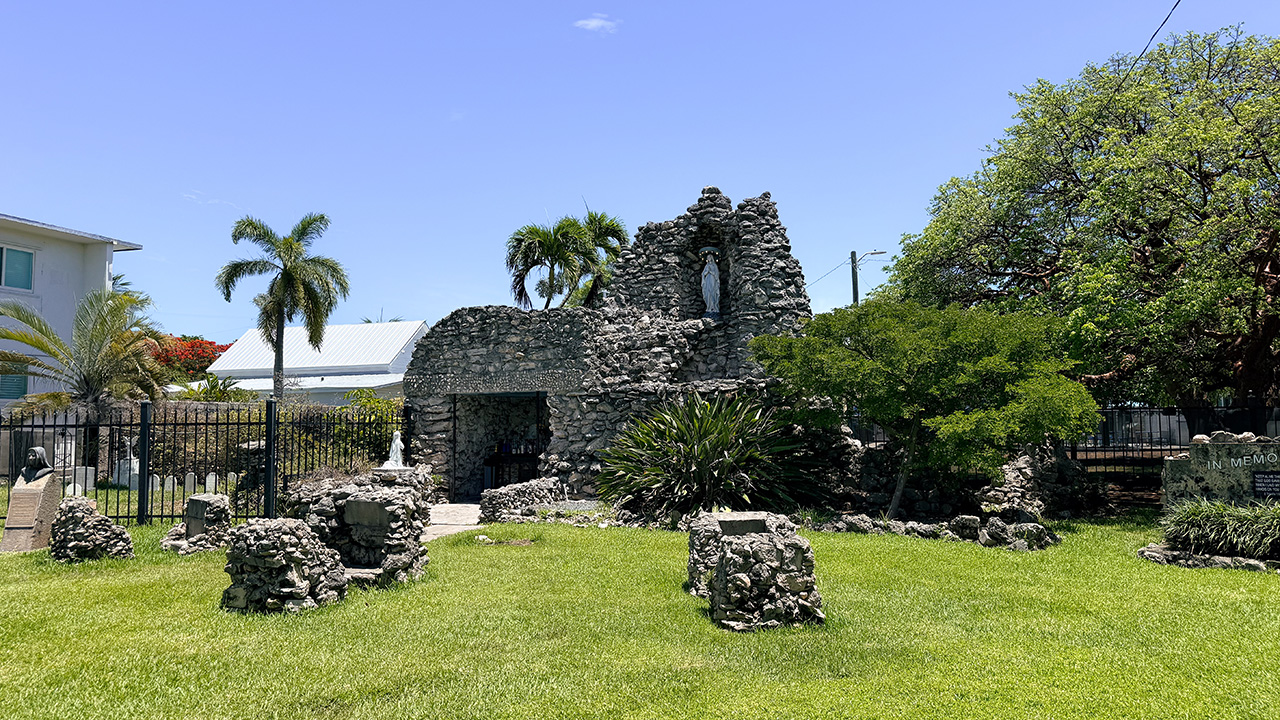
Historic Hurricane Grotto at Basilica of St. Mary Star of the Sea – Photo by: @NikaStroblePhotography
If you’re walking the Old Town historic district, it’s an easy detour between the Key West Cemetery and the Casa Marina neighborhood. Worth ten minutes of your morning.
A Window Into Key West’s Character
Stories like the Hurricane Grotto are part of what makes Old Town and the surrounding historic neighborhoods feel different from anywhere else in Florida. These aren’t manufactured landmarks. They’re working pieces of community memory, still alive in the conversations of the people who live near them.
When clients ask me what it’s really like to own a home in Key West — beyond the architecture, beyond the views — this is what I tell them. You’re not just buying a property. You’re stepping into a hundred years of stories, traditions, and a particular way of taking care of one another that the island has carried through every storm.
That’s the part that doesn’t show up in a listing photo.