
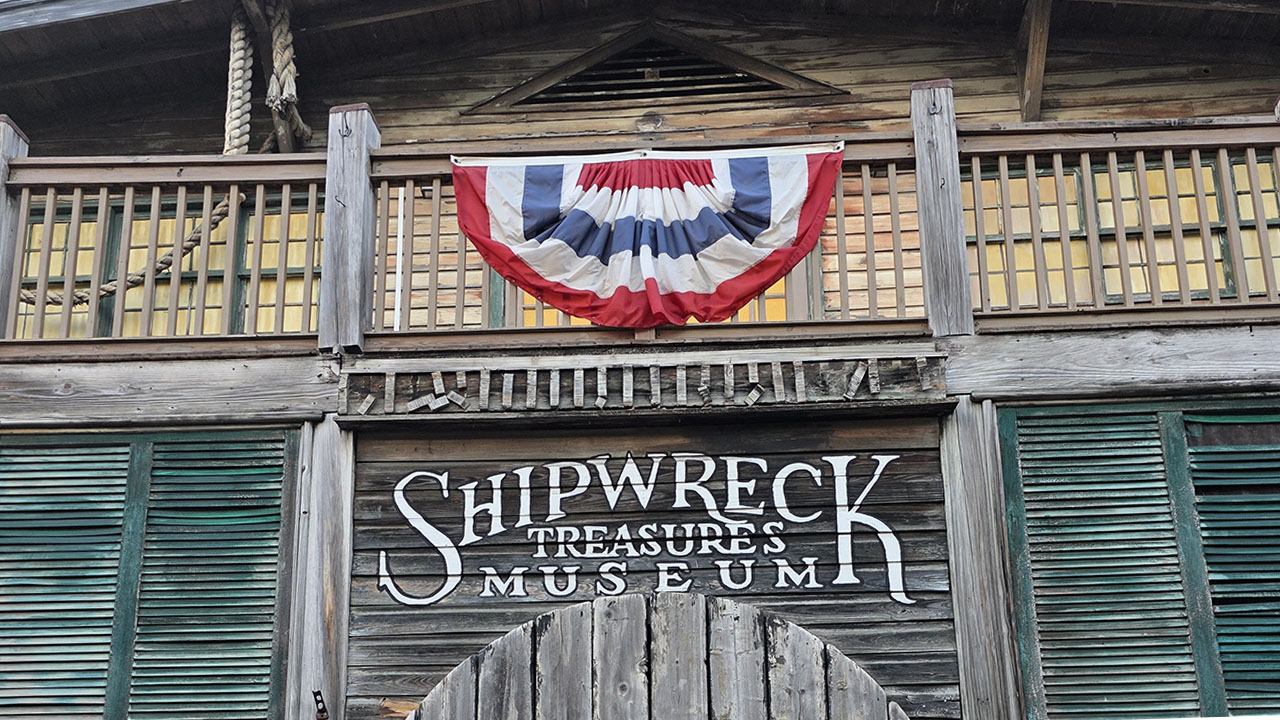
Two words emptied this island faster than anything else in the nineteenth century. A lookout spotted a sail canted wrong on the horizon, the cry went up, and Key West stopped — shops shut, church let out early, men ran for the harbor. Whoever reached the wreck first became wrecking master and took the largest share. Everything depended on those first few minutes.
That scramble built the town. Not metaphorically — literally. The money that came off those reefs went into land, lumber, and labor, and the houses it paid for are the ones people fall in love with on Eaton and Caroline and Whitehead today. If you own a historic home in Old Town, or are thinking about it, you are holding a piece of the salvage trade.
The Reef Did the Rest
Geography set the whole thing up. The Straits of Florida were the choke point for shipping moving between the Gulf, the Caribbean, and the Atlantic seaboard, and the Gulf Stream pushed hard through them. Just under the surface sat a coral reef that ran the length of the Keys — shallow, sharp, and, for a long stretch of the 1800s, badly charted and poorly lit.
The numbers are startling. One study counted 324 documented wrecks on the Florida Reef between 1833 and 1841, with 63 of them on Carysfort Reef alone. That is a ship going down roughly every ten days across the reef line, year after year, each one carrying cargo that had to be recovered by someone.
It Was a Licensed Profession, Not Piracy
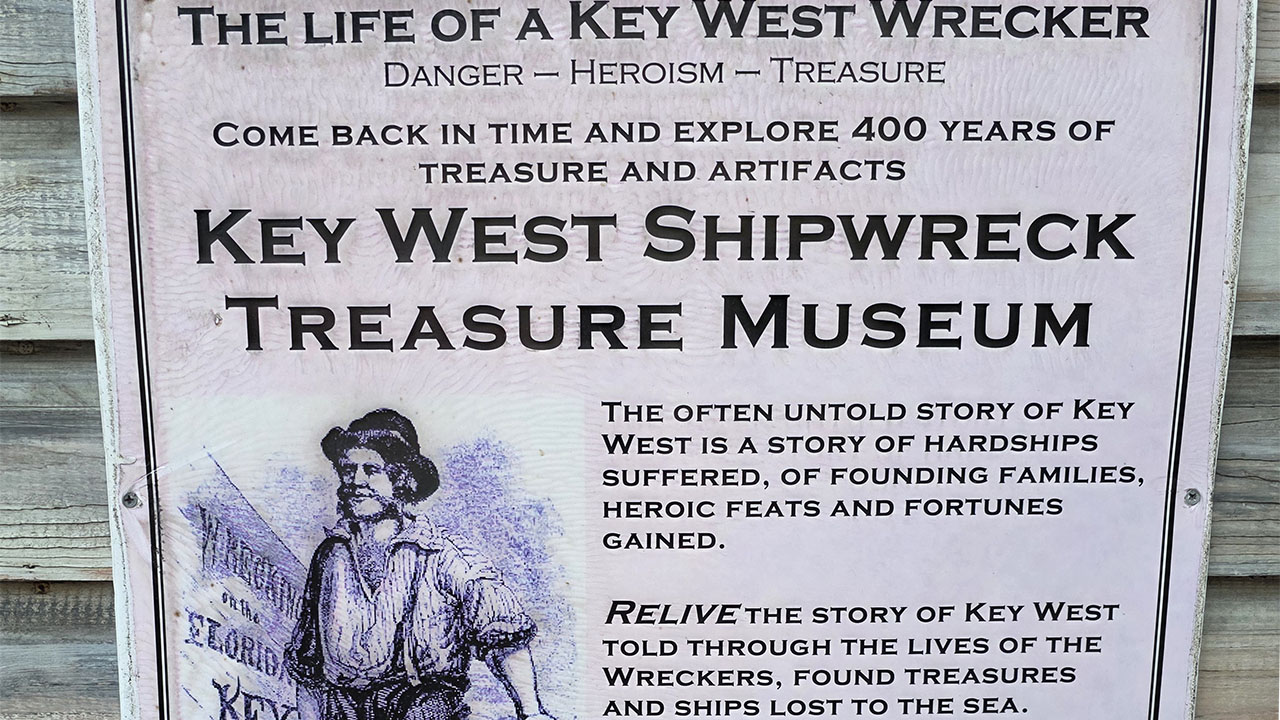
The romance of the era tends to blur this, so it is worth being plain: wrecking was legal, regulated, and heavily supervised. A federal court with admiralty jurisdiction was established in Key West in 1829, and wreckers operated under government-issued licenses. When a vessel went down, the salvaged cargo came back to Key West, the court determined its value, and a judge set the salvage award. Twenty-five to fifty percent of the value was a common range — half to the wrecking captains, with the largest cut to the wreck master, and the other half split among the crews. The divers, who went down without masks or tanks, took the biggest individual shares.
The man who defined the system was Judge William Marvin, who sat on the Key West bench from 1839 to 1845 and again from 1847 to 1863. He heard so many salvage cases that in 1858 he published, “A Treatise on the Law of Wreck and Salvage, which became the standard American authority on the subject. A body of maritime law that is still cited was worked out, case by case, in a courthouse on this island.
There were bad actors — false lights, inflated claims, the occasional captain who arrived suspiciously fast. But the caricature of Key West wreckers as pirates in respectable clothing does not survive contact with the court records. Most of it was rescue work first and salvage second, done in weather no one would choose.
The Money Came Ashore and Became Houses
The scale of what flowed through here is hard to picture now. By the 1830s Key West was the wealthiest city per capita in the United States, and the island had become Florida’s leading port. In 1846 alone, wreckers recovered roughly $1.6 million worth of goods — in a town of a few thousand people.
That money had to go somewhere, and on an island two by four miles there were not many options. It went into ship chandleries, warehouses, wharves, and shipyards. And it went into houses. Big ones, built to be seen.
William Curry is the clearest example. He arrived from Green Turtle Cay in the Bahamas in 1837, sixteen years old and with nothing, took a clerk’s job, and built an empire across wrecking, merchandising, and shipbuilding. He became Florida’s first millionaire. His children went on to build mansions across Old Town — seven of them, several still standing and several within a couple of blocks of the original family homestead on Caroline Street.
He was not alone. Capt. John Huling Geiger, a harbor pilot and master wrecker, built the house at Whitehead and Greene between 1846 and 1849 that we now call Audubon House. Asa Tift, the island’s most prominent salvager, built the limestone house on Whitehead in 1851 that Ernest Hemingway would buy eighty years later. The oldest surviving house in South Florida, built in 1829 on Duval, belonged to Capt. Francis Watlington — harbor pilot, wrecker, and state legislator.
Walk Old Town and you are walking a map of who did well on the reef.
What the Wreckers Built
The people who built these houses were, in many cases, the same people who built the boats. Bahamian and New England ship’s carpenters brought their trade ashore, and it shows in nearly every structural decision.
Houses went up on posts or stone piers, raised off the ground so air moved underneath and floodwater passed through rather than into. The frames were post-and-beam, cross-braced, joined with mortise-and-tenon and pegged with treenails rather than nailed. That is a ship’s frame, and it behaves like one: in a heavy blow the house flexes instead of resisting, which is a large part of why so many of them are still here. Interior walls were finished in wood rather than plaster, precisely because plaster cracks when a frame moves. Every room was framed as a sturdy cube. Roofs were pitched steep to shed rain, porches were run deep for shade, and shutters were louvered to keep sun out while letting the breeze through.
Then there is the detail that gives the whole era away: the roof scuttle. A hatch in the roof, sometimes with a small railed platform above it, that let a man climb out and glass a long stretch of the reef from his own house. The Oldest House still has a ship’s hatch in the roof above the primary bedroom. That is not decoration and it is not a widow’s walk in the New England sense — it was a business tool. First man to see the wreck won.
The Lights Went Up and the Trade Went Out
What ended wrecking was not a crash. It was competence.
After the Havana Hurricane of 1846 flattened Key West — only six of the island’s roughly 600 homes escaped unroofed or destroyed — Congress finally funded a proper system of reef lights. Carysfort Reef Lighthouse was first lit in March 1852, and others followed down the chain at Sand Key, Sombrero, and beyond. Charts improved. Steam replaced sail. Ships stopped hitting the reef.
The trade thinned out over the following decades and never recovered, though it took a long time to formally die: the federal wrecking registry did not close until 1921. Key West found other work — cigars, sponging, the Navy — but the wrecking money had already done its most permanent thing. It had built the houses.
What This Means When You Are Standing in One
When we walk a client through a historic Old Town property, this history is not background color. It is a checklist.
We look at the foundation — whether the house still sits on its original piers and whether that crawl space is doing its job. We look at the framing where it is visible, because pegged mortise-and-tenon joints and old-growth Dade County pine are a different asset than a house that has been quietly re-framed. We look at the roofline for a scuttle or the scar where one was closed up. We look at whether the wood interior walls are original or drywall over the top of something better. We look at what previous owners chose to keep.
These are not luxuries of construction. They are the reasons a house from the 1840s outlived the ones built after it, and they are the reasons the Old Town district holds its value the way it does. A well-kept historic home here is a working piece of nineteenth-century engineering that someone has had the sense not to ruin.
That is what you are buying. It is also what you are agreeing to look after.
Frequently Asked Questions
Q: Was wrecking in Key West legal?
A: Yes. Wreckers held government-issued licenses and worked under a federal court with admiralty jurisdiction established in Key West in 1829. Salvaged cargo was brought back to the island, valued by the court, and sold at auction, with the judge setting the salvage award. Awards of 25 to 50 percent of cargo value were common.
Q: Why was Key West the richest city in America?
A: By the 1830s the island was the wealthiest city per capita in the United States, and it was the salvage trade that did it. Key West sat at the choke point of Caribbean and Gulf shipping beside a poorly charted reef, and it held the court that valued and auctioned everything recovered from that reef. In 1846 alone, wreckers recovered around $1.6 million in goods.
Q: Are Key West homes really built from shipwreck materials?
A: Some salvaged material certainly went into island buildings, and it is a favorite local story. But the more consequential inheritance is the technique, not the timber: houses framed like ships, by ship’s carpenters, with pegged mortise-and-tenon joints and post-and-beam construction. When evaluating a specific home, treat a shipwreck-wood claim as something to verify rather than assume.
Q: What is a roof scuttle on a Key West house?
A: A hatch in the roof, occasionally with a small railed platform, that let the household climb out and watch the reef for wrecks. On a wrecker’s house it was working equipment — the first captain to reach a wreck became wrecking master and took the largest share of the award. Several survive in Old Town, and others were closed up during later renovations.
Q: When did the wrecking era end?
A: It faded rather than stopped. The Carysfort Reef light was first lit in 1852 and a chain of reef lights followed, which — along with better charts and the shift from sail to steam — steadily reduced groundings. The federal wrecking registry finally closed in 1921.
Brenda Donnelly Real Estate has spent more than two decades representing the historic homes of Key West — the wreckers’ houses, the Conch cottages, and the mansions the reef paid for. If you are considering buying or selling on this island, we would be glad to walk you through what to look for.
1119 White Street, Key West, FL 33040 • 305.304.1116 • brendadonnelly.com